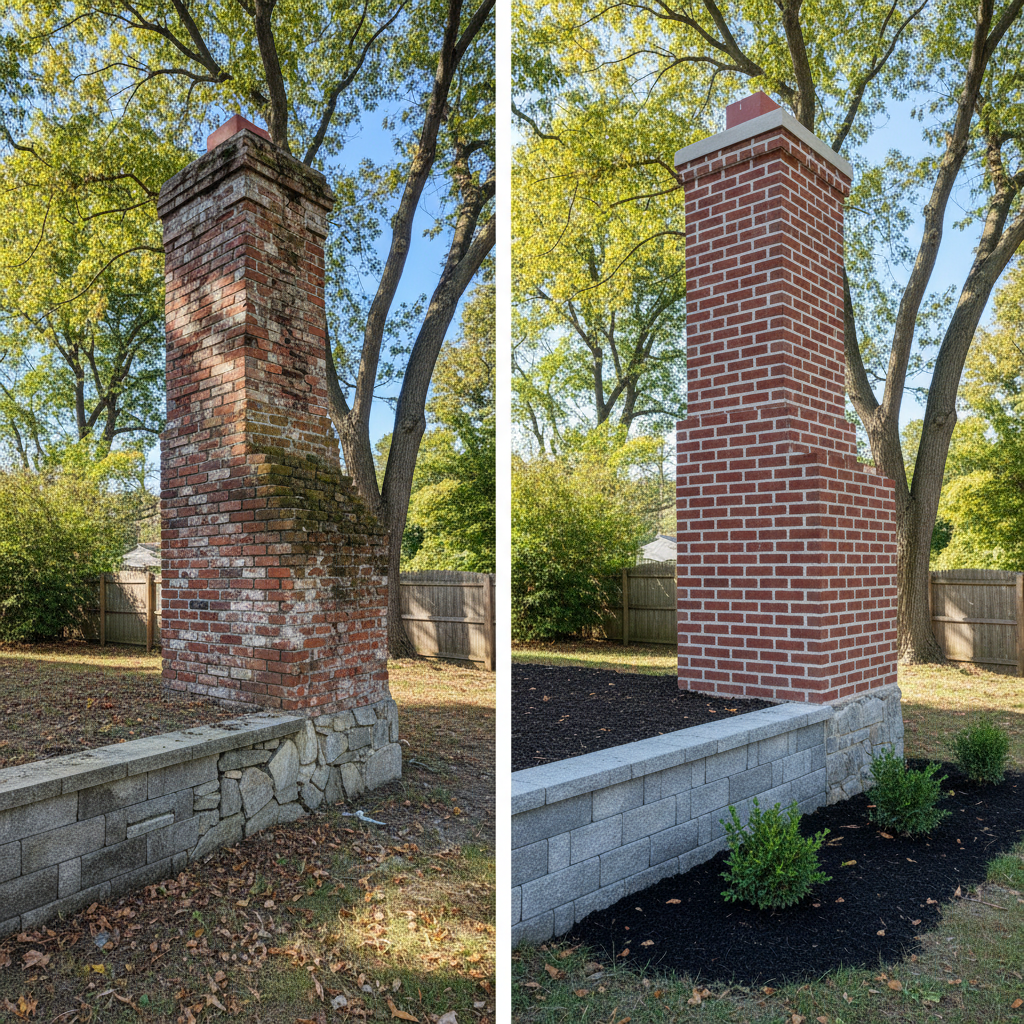
Your chimney's looking a bit rough, huh? Maybe you've noticed some crumbling mortar, loose bricks, or even a bit of water getting in. It's a common problem around here, especially with our harsh New England winters and those freeze-thaw cycles that really do a number on masonry. So, what's the fix? Usually, it comes down to two main options: repointing or a full chimney rebuild. Let's talk about both, honestly.
Repointing: The Mortar Refresh
Repointing is essentially replacing the old, failing mortar joints between your chimney's bricks. We carefully grind out or chip away the deteriorated mortar and then pack in fresh, new mortar. Think of it like getting new grout for your bathroom tiles, but on a much bigger, more structural scale.
When Repointing Makes Sense
- The Bricks Are Good: This is key. If your bricks themselves are in solid shape – not spalling (flaking apart), cracked, or badly eroded – then repointing is usually the way to go. The mortar is often the first thing to give out, especially on older homes in areas like Waban or Newton Centre where chimneys have seen decades of weather.
- Cost-Effective: It's almost always cheaper than a full rebuild. You're paying for labor and materials to replace just the mortar, not the entire structure.
- Appearance: A good repointing job can dramatically improve the look of your chimney. We match the color and texture of the existing mortar as closely as possible, so it blends right in. It's not just cosmetic, though; it's about protecting the brick from further damage.
- Durability: If done right, with the proper mortar mix for our climate, a repointed chimney can last another 20-30 years, sometimes more. The new mortar is designed to withstand the elements better than the original stuff often was.
The Downside of Repointing
If your bricks are already compromised, repointing is just a band-aid. You can put new mortar around bad bricks all day long, but those bricks will keep deteriorating, and you'll be back to square one pretty quickly. It's also a labor-intensive job, so while it's cheaper than a rebuild, it's not a trivial cost.
Chimney Rebuild: Starting Fresh
A full chimney rebuild means taking down the entire chimney, or at least the part that's exposed above the roofline (what we call the chimney stack), and then rebuilding it brick by brick. Sometimes, if the damage goes below the roofline, we have to go further down, but often it's just the exposed portion that takes the brunt of the weather.
When a Rebuild is Necessary
- Extensive Brick Damage: If your bricks are spalling, cracking, or crumbling all over the place, or if they're severely out of plumb (leaning), repointing isn't going to cut it. You need new bricks.
- Structural Issues: If the chimney is leaning significantly, has large cracks running through the bricks themselves, or if the flue liners are severely damaged, a rebuild is often the only safe option. You don't want a chimney collapsing, especially not on your roof.
- Water Penetration: If you've got persistent water leaks that can't be fixed by minor repairs or flashing work, it often points to widespread deterioration that only a rebuild can address.
- Long-Term Peace of Mind: A full rebuild, done correctly, gives you essentially a brand-new chimney stack. It's built to modern standards, often with better materials and techniques than the original, and it should last for many decades.
The Downside of a Rebuild
The biggest one is cost. It's a significant investment because you're paying for demolition, removal of debris, and all new materials and labor for the entire structure. It's also a bigger project, meaning more disruption to your property for a longer period. However, sometimes it's the only real solution.
My Recommendation for Newton Homeowners
Here's the deal: For most homes in Newton, especially the older ones, I see a mix of both. Many chimneys just need a good repointing job to shore them up and protect them for another 20 years. But I've also seen plenty that are beyond that point, where the bricks are so far gone that a rebuild is the only responsible choice.
My advice? Get a professional assessment. Don't just guess. At Ace Masonry Co., we'll get up there, take a good look, and give you an honest opinion. We'll show you what we're seeing, explain why we recommend one approach over the other, and give you a clear estimate. We'll also talk about things like chimney caps and proper flashing, which are crucial for any repair to last in our climate.
Ultimately, you want a safe, functional, and good-looking chimney that can stand up to those brutal January freezes and August downpours. Whether that's a careful repoint or a complete rebuild, getting it right the first time saves you headaches and money down the road.