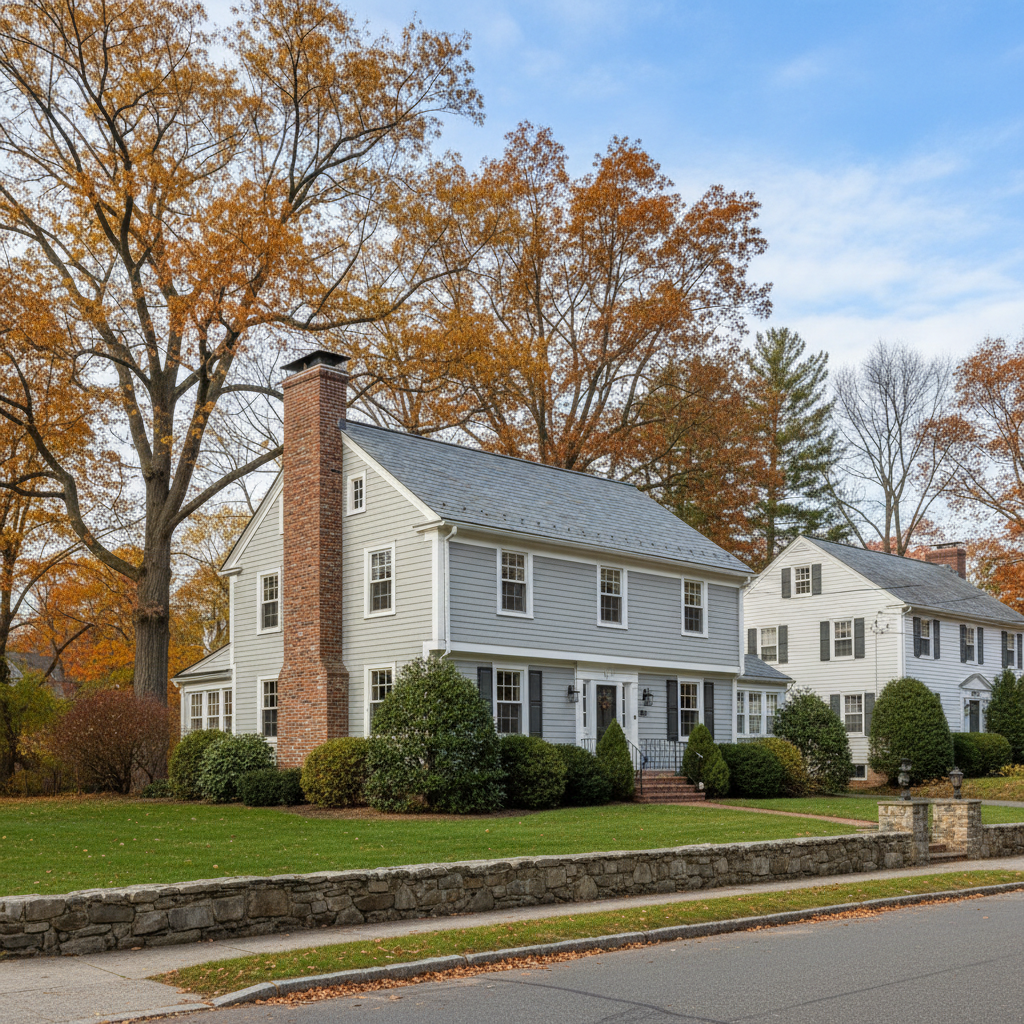
Think about your chimney for a second. It's probably the most exposed part of your house, sticking up there, taking a beating from all sides. Here in Newton, that means dealing with everything from our brutal winter freezes and thaws to those surprisingly intense summer thunderstorms. It's not just about looking pretty; it's about safety and keeping your home warm and dry.
Our Weather, Your Chimney's Wear and Tear
I've seen it time and again: a chimney that looks fine from the ground can be a real mess up close, especially after a few New England winters. We get this constant cycle of freezing and thawing that's just brutal on masonry. Water seeps into tiny cracks, freezes, expands, and then thaws, leaving bigger cracks. It's like a slow-motion demolition crew working on your brickwork.
Then there's the wind. We get some serious gusts here, especially on those higher elevations in places like Newton Centre or Chestnut Hill. That constant buffeting can loosen mortar joints over time, making your chimney vulnerable. And let's not forget the rain. When water gets into the chimney structure, it can lead to all sorts of problems, from deteriorating flue liners to damaged fireboxes, and even leaks inside your home.
Common Chimney Issues We See Around Newton
So, what kind of problems do we typically run into? A lot of it comes down to water damage. Here's a quick rundown of what I'm usually looking for:
- Cracked or Spalling Bricks: This is when the face of the brick starts flaking off. It's a classic sign of water absorption and freeze-thaw damage. Once the brick starts spalling, it loses its protective layer and deteriorates even faster.
- Deteriorated Mortar Joints: Those lines between your bricks? They're mortar, and they're often the first thing to go. When they start crumbling, water gets in, and the whole structure weakens. Repointing, which is grinding out the old mortar and putting in new, is a common fix.
- Damaged Chimney Crowns: The crown is the slab of concrete or stone on top of your chimney, designed to shed water away from the flue and the masonry. If it's cracked, water can seep right down into the chimney structure, causing major headaches.
- Flue Liner Problems: Inside your chimney, there's a flue liner – usually clay tiles or a metal pipe. It's crucial for safely venting smoke and gases. Cracks or blockages in the liner are serious safety hazards, potentially leading to carbon monoxide leaks or chimney fires.
- Leaky Flashing: This is the metal work where your chimney meets your roof. It's supposed to be watertight. If it's old, bent, or improperly installed, it's a prime spot for leaks into your attic or walls.
Why Local Expertise Isn't Just a Buzzword
You might think a chimney is a chimney, no matter where you are. But that's just not true, especially in an area like Newton. We've got a lot of older homes, some dating back to the late 1800s or early 1900s, with unique construction methods and materials. The bricks used back then, the type of mortar, the way the chimneys were built – it's all different from modern construction. A contractor from out of town might not understand these nuances.
For example, the soil conditions here in Newton, with its mix of glacial till and clay, can sometimes affect foundations and, by extension, chimney stability over many decades. We also understand the specific building codes and permitting processes unique to Newton. You don't want someone guessing their way through that.
When Ace Masonry Co. comes out for a chimney inspection or repair, we're not just looking at the immediate problem. We're looking at the whole picture: the age of your home, its exposure to the elements, the historical construction methods, and how all those factors contribute to what we're seeing. We know what kind of damage to expect from our specific weather patterns and what materials will hold up best long-term in this climate.
It's about having that deep, local knowledge that comes from years of working on homes right here in your neighborhood. It means we can diagnose problems more accurately, recommend the right solutions, and ensure your chimney is safe and sound for many more New England seasons to come.